Healing & Wholeness
Healing & Wholeness
By Angela Draper on Wednesday, July 8th, 2026 in Angela Draper Acupuncture No Comments
Dry needling is having a moment.
Athletes, active adults, and anyone dealing with stubborn muscle pain are hearing more about it as a treatment for tight muscles, trigger points, and movement limitations. But despite the modern name, dry needling isn’t new. Acupuncturists have used these techniques for thousands of years – calling it Ashi needling, motor point needling or simply acupuncture.
Many people searching online for dry needling in San Diego are looking for relief from muscle knots, trigger points, sports injuries, or chronic muscle pain. In California, these techniques are commonly provided by licensed acupuncturists trained in orthopedic and sports medicine, as part of a more comprehensive treatment approach.
Dr. Angela Draper, L.Ac, DACM approaches dry needling through the lens of sports and orthopedic acupuncture. That means she’s not just chasing sore spots — she’s evaluating how muscles, joints, nerves, connective tissue, and movement patterns are contributing to pain or performance limitations. Layered on top of that is Chinese medicine theory, a deep and highly effective system for reducing pain and correcting imbalances. It’s this broader framework that turns dry needling from a simple spot treatment into comprehensive orthopedic care.
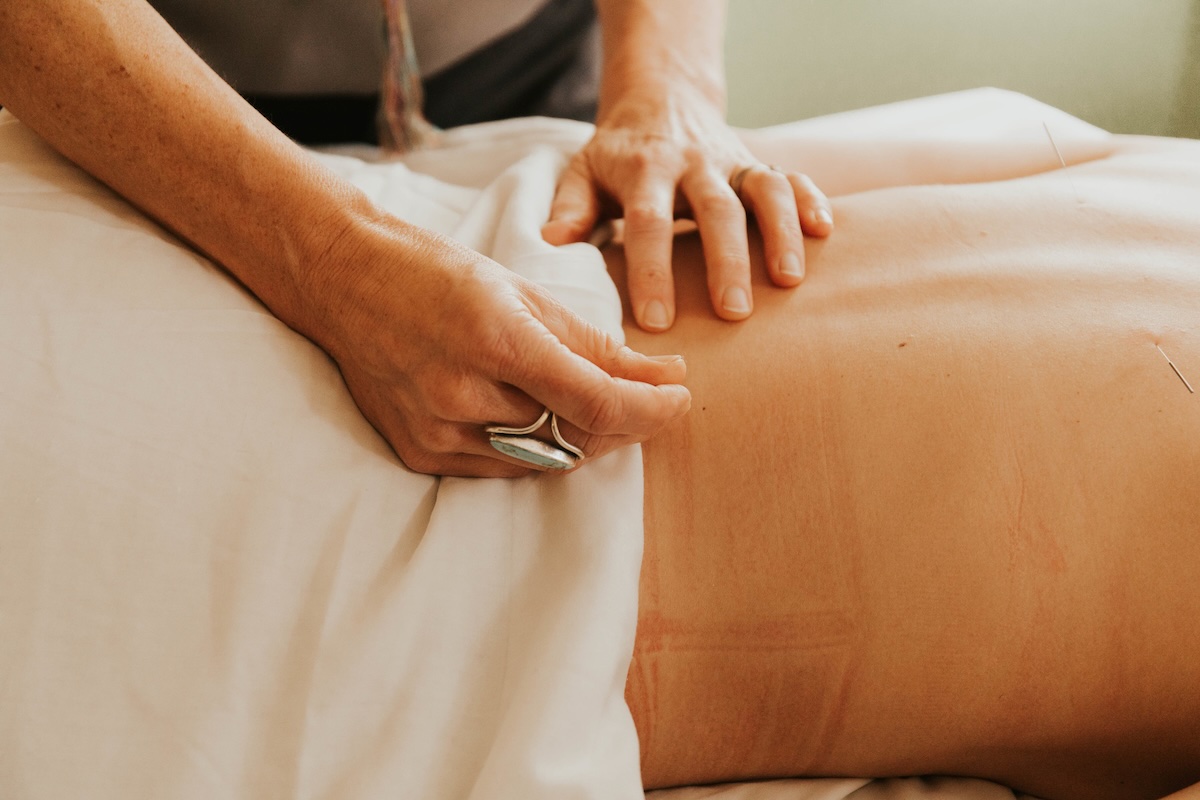
Dry needling is a technique that uses thin, solid acupuncture needles to stimulate muscles, trigger points, and connective tissue. The goal is to reduce pain, improve movement, and restore normal muscle function. It is called “dry” because no medication is injected. If you’ve never had acupuncture, you’ll be relieved to know that these needles are extremely fine and not at all like needles used for shots.
Dry needling and acupuncture aren’t separate practices – dry needling is one technique within the broader medical system of acupuncture. So the answer is both no, and yes.
While dry needling is often presented as a modern innovation, it’s deeply rooted in classical acupuncture tradition. Dry needling targets trigger points – the same tender, reactive points that have been called Ashi points for thousands of years, needled for the same purpose: to relieve muscular tension and pain. In modern acupuncture practice these are often called motor points.
Acupuncture is a traditional medical system that can treat a large array of diseases and complaints using points throughout the body. There are many different styles and specialties within acupuncture, and you will typically find that sports, orthopedic, and pain specialists tend to utilize more motor point, or dry needling. The distinction with acupuncture is that dry needling is combined with a larger, comprehensive treatment plan to alleviate pain and restrictions and restore function to the body.
One important technique within sports and orthopedic acupuncture is motor point needling.
Think of a motor point as the muscle’s “control center.” It’s the place where the nerve communicates with the muscle. Stimulating this area with a needle can help change muscle tone, improve activation, reduce protective guarding, and restore better movement. Motor points often overlap with trigger points – the areas where muscles commonly develop knots and become tender or irritated.
Motor point therapy is often enhanced by applying electrical stimulation to needles at multiple strategic points for stronger therapeutic results.
In simple terms, motor point acupuncture isn’t just about “releasing a knot.” It’s about helping the nervous system and muscles communicate more effectively.
This can be especially useful when a muscle feels tight, weak, inhibited, overworked, or difficult to activate during movement.
 What Is Sports and Orthopedic Acupuncture?
Sports and orthopedic acupuncture focus on the muscles, joints, tendons, nerves, and connective tissues involved in pain, injury, and performance.
Instead of treating symptoms in isolation, treatment looks at the full picture:
This is where motor point needling (dry needling) fits best. It can be a powerful tool, but it works best when combined with a full treatment plan. That’s why Dr. Angela Draper works closely with her colleagues at Peak Form Health Center in San Diego, calling on their expertise in training, rehabilitation, and chiropractic care when needed.
Motor point needling (dry needling) can help with a wide range of muscle and joint conditions when performed by an acupuncturist, including:
Most people feel a small prick or pressure when the needle is inserted – typically much less noticeable than a standard injection, since the needle incredibly thin and entirely different than ones used for shots or to draw blood. When a trigger point or motor point is stimulated, you may feel a twitch, dull ache, cramp-like sensation, or temporary soreness. This twitch response is a normal, well-documented reaction and is often a sign that the muscle is releasing tension.
That response is usually brief. Some people feel immediate improvement in motion or muscle tension. Others feel sore for 24 to 48 hours before noticing improvement, similar to the feeling of a deep tissue massage or an intense workout.
Motor point and dry needling is generally safe when performed by a properly trained provider. The most common side effects are temporary soreness, bruising, minor bleeding, or fatigue. Rare but serious complications, including pneumothorax (collapsed lung), can occur with any needling procedure near the chest.
A few things worth knowing about provider training and safety:
Regardless of the provider, it’s reasonable to ask about their education, clinical training, and experience before treatment.
The key is choosing a licensed provider who understands anatomy, diagnosis, safety, and how to integrate needling into a complete care plan.
Dr. Angela Draper, LAc, DACM, brings 15 years of specialized experience in sports medicine and orthopedic acupuncture. Her approach combines motor point or dry needling – to calm irritated tissue, restore muscle function, and create a window for better movement – with traditional acupuncture and hands-on therapies that treat the root cause, not just the symptoms. By addressing both the source of pain and what’s driving it, she helps patients recover from injuries, manage chronic pain, and get back to doing what they love.
Whether you’re curious about dry needling or looking for lasting relief from pain or injury, orthopedic acupuncture may be the right fit.
Book with Dr. Angela Draper to learn how orthopedic acupuncture can support your recovery. She’s happy to answer any questions along the way.
References
Lin SK, Liu JM, Hsu RJ, Chuang HC, Wang YX, Lin PH. Incidence of iatrogenic pneumothorax following acupuncture treatments in Taiwan. Acupunct Med. 2019;37(6):332–339.
Witt CM, Pach D, Brinkhaus B, Wruck K, Tag B, Mank S, Willich SN. Safety of acupuncture: results of a prospective observational study with 229,230 patients and introduction of a medical information and consent form. Forsch Komplementmed. 2009;16(2):91–97.